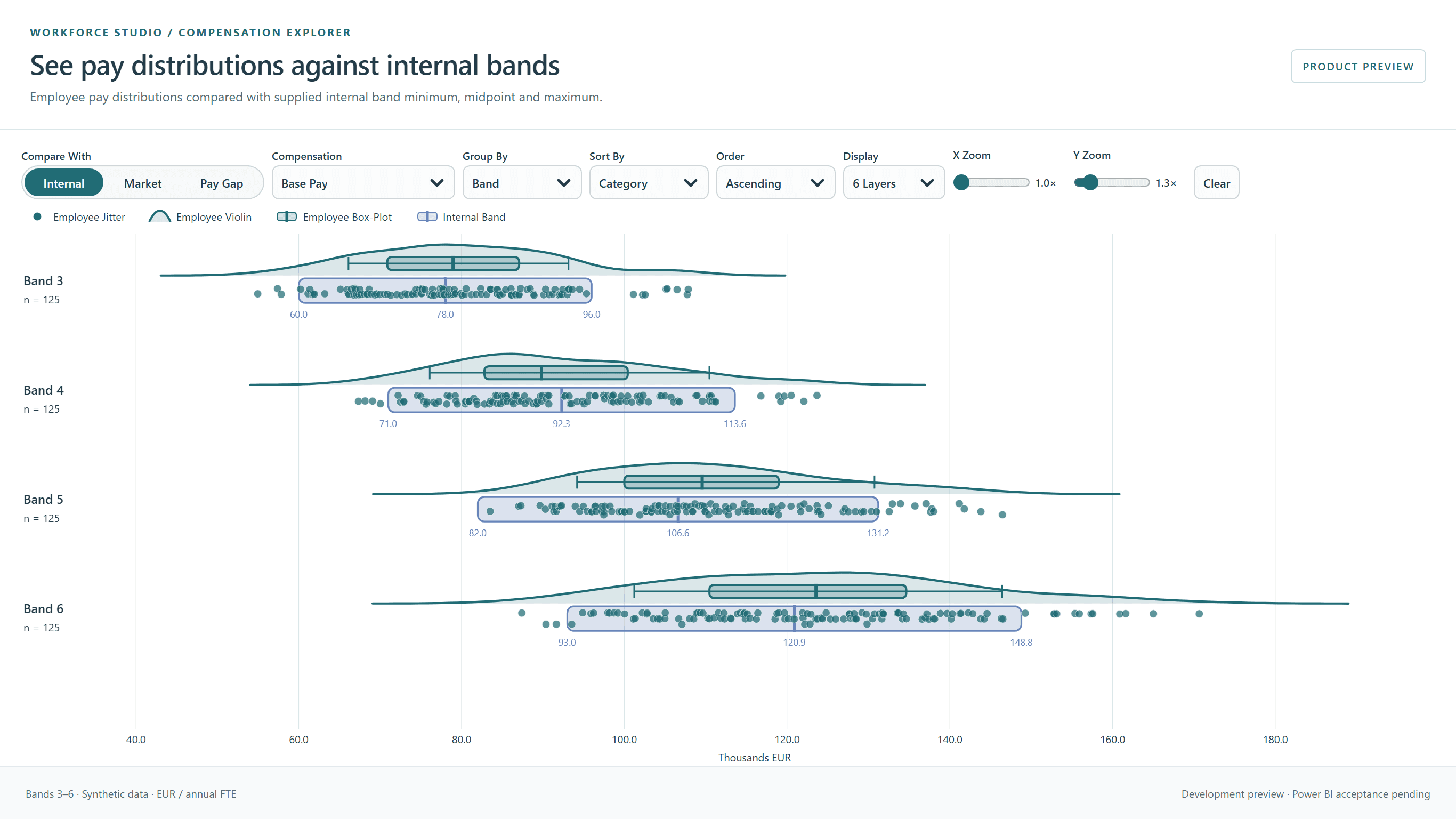
A pay structure is a set of decisions. Which pay measure counts. Where the ranges sit. Which market is relevant. Who is compared with whom. When these decisions are implicit the structure cannot be explained and every exception becomes an argument.
We make the decisions explicit and build the structure on the job architecture. Comparable groups come from jobs and grades and not from titles. Market references are documented so a committee can see where a number came from.
How we work
- Define the pay measures. Base, fixed cash, total cash and the rest. One measurement contract per figure.
- Form comparable groups. From the job architecture and the grades. Never from titles.
- Build or review the ranges. Minimum, midpoint and maximum per grade with a documented policy behind them.
- Match market references. Public statistics for context and specialist surveys where the decision needs them. Every reference gets a record.
- Analyse positions. Compa-ratio, range penetration and market ratio per employee and per group.
- Decide and document. The policy, its exceptions and the review cycle in writing.
What you get
- A range structure on the job architecture
- A market reference register
- Pay position analysis per group and per employee
- Compensation Explorer set up on your data
Where it usually starts
- Ranges exist on paper and are not used in practice.
- Market data is quoted in meetings and nobody knows its source.
- Pay decisions take too long because every case is argued from scratch.
Public earnings statistics from Destatis and Eurostat provide context. Specialist surveys cover what they cannot.